
Hashchain is the ultimate data security technology
Sees Co., Ltd.
Sees Co., Ltd.
- Products & Services
- Sees Blockchain
-
BackSees Blockchain is the result of research that has taken shape since the dawn of blockchain. We have educated and deployed the importance of data security.
-
 Sees Blockchain
Multiple applications can be added, and data is safe because it is encrypted, divided, and stored in a distributed manner. -
Blockchain Server
You can get a blockchain node server with pre-installed blockchain just by purchasing it.
-

- Enterprise
Blockchain -
BackVarious functions are implemented so that the blockchain can be integrated with more applications.
-
NFT-based reservation rights issuance and trading system
Reservation NFT for unattended reservation fair trade. issue reservation NFT and build a trading website. -
Pre-packaged Blockchain
We deliver blockchains customized to your specifications with ready-made applications that answer all your needs.
-
- Blockchain SaaS
-
BackSaaS that provides the Sees Blockchain via cloud computing to enable secure recording and proofing of various types of data.
-
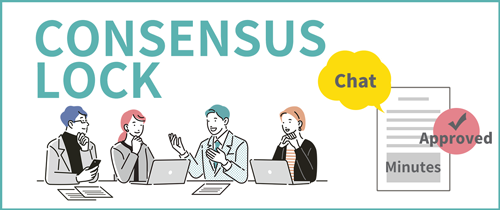
Consensus Lock
Mutually confirm and share the consensus and conclusions of all participants in a meeting to prevent unnecessary problems!
-
- Embedded
Blockchain -
BackBlockchain built into a small terminal! Portable blockchain that can be used for remote work, etc.
-
Sees Blockchain Security System
A security system that meets the four security requirements of information leakage prevention, tampering prevention, stable operation, and user authentication to significantly reduce risk. -
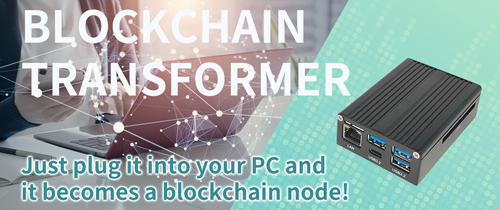
Blockchain Transformers
Just plug it into your PC and it becomes a blockchain node. Data security can be strengthened and data can be safely exchanged even when working from home. -
Blockchain Gateway
Realize a "blockchain environment" by simply connecting to a LAN. Strong security protects documents and data files from tampering or leakage.
-
- Blockchain Chip
-
BackBased on the innovative technology of blockchain as a chip, we were the first in the world to introduce blockchain to the IoT.
-
Blockchain Chip
Revolutionary technology for the IoT with the ultimate miniaturization of the blockchain on a single chip. Provides an inexpensive and secure data assurance recording system. -
Mobile Blockchain Nodes
Mobile devices for internal use are converted into blockchain nodes, and the blockchain network provides perfect protection for transmitted and received data.
-

- AI Blockchain
-
BackAutonomous decentralized AI added to a decentralized network of blockchain chips; the world's first technology that merges AI and blockchain.
-
Autonomous Distributed AI Cell
A blockchain chip and a CPU for distributed AI are contained in a single chip. It is a composite chip that acts like an artificial neuron. -
Facial Recognition/Recognition AI Blockchain Surveillance Camera
Facial recognition/Recognition AI and blockchain on a single chip embedded in a camera. It is the ultimate AI blockchain surveillance camera. -
AI Poisoning Prevention System
The AI front engine is also implemented to prevent the input of erroneous information.
-

- Hashchain
-
BackChip hash chain, the third layer of blockchain, based on Sees's proprietary technology.
-
Wireless I/O control Hashchain chip
Wireless transmission system that allows data transmission to and from sensors and actuators via a single channel. Safety is ensured by the third layer of blockchain. -
Autonomous Distributed AI Cell(Hashchain Edition)
A Hashchain chip and a CPU for distributed AI are integrated into a single chip. It is a composite chip that acts like an artificial neuron.
-
- Development and
implementation support -
BackVarious tools that allow anyone to easily learn and build blockchain, as well as an OS dedicated to blockchain.
-
Sees Blockchain Development SDK
This kit allows you to build blockchain applications without any technical knowledge. Development support is also included. -
Blockchain custom-made development
Original blockchains can be built on a low budget and in a short period of time, and can be integrated with existing in-house applications. -
Support for blockchain implementation
This service is for customers who want to introduce blockchain or develop their own blockchain. -
Blockchain Learning Tool "Hakoniwa System"
You can run the blockchain in your local environment. It is the only tool that allows you to learn smart contracts while seeing what's inside the blockchain. -
 Sees Blockchain Linux
The ultimate blockchain Linux for fast and stable blockchain operation, available in cloud and embedded versions.
-



- Sales Support
- Presentation
-
BackOur presentation video clearly explains Sees technology.
-
Presentation
Coming soon.
-
- Essence
-
BackA white paper-style story detailing Sees technology and history
-
Sees Blockchain Story
Sees Blockchain: An Industry-Optimized Blockchain Architecture Built on the Origins and Challenges of Blockchain Technology. -
Sees Hashchain Story
Sees Hashchain: A Trusted Communication Data Infrastructure Ensuring Continuity, Integrity, and Authenticity.
-

- Topics
-
BackWe introduce Sees latest technologies and services.
-
Scramble Memory
Scramble memory, the ultimate information recording method that cannot be read even if stolen, is the appropriate way to protect information in the age of zero-trust.
-
- Development Support
- Development Consulting
-
BackDevelopment consulting based on proven results in supporting external CTOs, CPOs, and CDOs.
-
Development Consulting
Coming soon.
-
- Offshore Development
-
BackJapanese quality at offshore prices. We handle all communication. Our local team is led by developers with Japanese experience.
-
Offshore Development
Coming soon.
-
The Birth of the Sees Hashchain
Control systems used in factories and social infrastructure acquire various kinds of data in real time, such as temperature, vibration, current, and video. This data is collected from sensors via networks to local servers or the cloud, where it is recorded in databases and used for monitoring, control, and analysis.
As for the security of the information that is ultimately recorded, using the Sees Blockchain makes it possible to raise resistance to tampering and leakage to an extremely high level through encryption and distributed technologies.
On the other hand, along the transmission path from the sensor to where the data is recorded on the Sees Blockchain, it is difficult to say that there is a fully established mechanism to provide a consistent end-to-end audit trail for the entire route.
Even if data is rewritten at intermediate devices or in transit between points on the route, it cannot be detected immediately, and a third party impersonating a legitimate sensor can inject tampered measurement data.
In practice, systems may continue to be operated without anyone realizing that sequence logs that should exist for each hop along the route are missing, or that parts of the data have been corrupted or altered during transmission due to noise or electrostatic effects.
Furthermore, in wireless communications, while the absence of cabling gives high flexibility in installation, retrofitting to existing facilities, and line changes, anyone within radio range can eavesdrop on or transmit communications.
There is also the risk of attacks in which a third party masquerades as a legitimate terminal and injects tampered data, which is one reason why wireless is often avoided in sensitive control systems.
In recent years, more and more use cases have appeared in which time-series sensor data is used to train AI systems for anomaly detection and predictive maintenance.
As noted above, if missing sequence logs, corrupted or altered in-transit data, or tampering by malicious third parties are mixed into the dataset, even an advanced system will arrive at wrong conclusions from wrong inputs.
If learning is carried out on such inaccurate or deliberately manipulated information, the system will inevitably learn undesirable outcomes.
Moreover, when an incident such as hacking or system failure occurs, if you cannot determine up to which point in time the data can be regarded as safe and from where invalid data has been injected, it becomes difficult not only to investigate the root cause and prevent recurrence, but also to provide explanations to customers and regulators.
In the field of information security, the guidelines of the U.S. National Institute of Standards and Technology (NIST) identify confidentiality, integrity, and availability as the fundamental properties for protecting information. In fields that require stricter control, such as pharmaceuticals and medical devices, the U.S. Food and Drug Administration (FDA) provides data integrity guidance and the ALCOA/ALCOA+ principles, which clearly demand that data be complete, consistent, and available and explainable when needed.
As these standards and regulations show, having “data that has not been tampered with and can be verified and proven when required” is an important requirement across all domains.
For industrial data as well, there is a strong demand for the ability to verify after the fact “where the data came from, in what order it was generated and transmitted, and that it was not altered along the way”, and to explain and prove this to third parties when necessary.
The Sees Hashchain was created in response to these needs. It is Sees’s proprietary patented information-security technology, newly researched and developed by re-examining from the ground up the core technology of the Sees Blockchain. Its purpose is to make it possible to verify, on the communication path itself, the integrity and authenticity of transmission data, including the consistency of the data’s point of origin and its time series and whether any tampering or loss has occurred along the transmission route, and to use the verification results as evidence that can later be reviewed, explained, and proven.
How the Sees Hashchain Works
Blockchain is a technology that makes it extremely difficult to tamper with a block once it has been recorded, by chaining blocks together using hash values generated by a hash function.
The Sees Hashchain applies this idea of “chaining blocks together with hash values” not to data that has already been recorded, but to data in transit.
More concretely, the system divides data that is continuously sent from sensors on the transmitting side to edge devices or servers on the receiving and processing side into fixed-size “segments”.
Each segment contains:
- The hash value of the immediately preceding segment
- The group of data items being transmitted in the current segment
- The hash value for the current segment, computed by applying a hash function to the hash value of the previous segment and the data in the current segment
all stored together.
This structure allows the segments to be chained together via their hash values and treated as a single continuous chain.

On the sending side, segments are generated in order from the beginning and then encrypted before transmission.As the encryption method, we use AES-256, a symmetric-key algorithm that enables high-speed processing and is currently regarded as offering a high level of security, even when potential future attacks by quantum computers are considered. This encryption protects each segment of the hashchain from eavesdropping on the transmission path.
On the receiving side, the segment is decrypted and the information contained inside is used for verification. First, a new hash value is generated from the data within the segment and the hash value of the immediately preceding segment, and it is verified whether this matches the “hash value of the current segment” written in the segment. In addition, it is verified whether the “hash value of the preceding segment” recorded in the segment matches the actual hash value of the segment that was received immediately before.
As long as these two conditions are satisfied, it can be computationally confirmed that the series of data from the first segment up to the current one constitutes an unmodified, continuous sequence of information in the correct order.
Conversely, if any rewriting or loss occurs anywhere, the hash values will not match during verification, making it possible to clearly distinguish the range of the chain that can be trusted and the point at which the anomaly occurred.
In this way, the Sees Hashchain is a technology that can verify in real time that data flowing along the transmission path has not been rewritten, and that there are no omissions or inconsistencies in the chain. Furthermore, by storing unique terminal identification information for the sending side in the first segment, the receiving side can determine “which terminal sent this chain”, making it possible to use the chain as evidence for subsequent analysis and investigation in the event of an incident.
In addition, the Sees Hashchain uses a dedicated communication protocol for sending and receiving data.
By minimizing header information, the protocol format remains lightweight, reducing overhead and enabling high throughput for the overall communication. Furthermore, by treating hashchain communication as a continuous stream over a single channel, the protocol is designed to make efficient use of limited wireless resources even in environments where many terminals share the same wireless medium. For facilities and equipment that rely on wireless networks, this combination of security and a lightweight, SingleChannel-oriented protocol yields extremely large benefits in terms of efficiency.

Mechanism for Verifying the Sender
So far we have explained how the Sees Hashchain can verify both the time-series consistency and the content integrity of transmission data. However, this alone is not always sufficient from the standpoint of data security, because there are cases in which it is impossible to tell whether the party sending the data is in fact a legitimate terminal.
In environments such as wireless communication, where anyone within radio range can send signals, it is necessary to prevent attacks in which a third party masquerades as a legitimate terminal and injects tampered data. The Sees Hashchain addresses this challenge by using a unique value called “Seed information” (hereinafter “Seed”), which can uniquely identify each terminal.
A Seed is assigned as a unique value to each transmitting terminal and is shared in advance between the sending and receiving sides using a secure method. The Seed itself is not placed inside the segment and is not disclosed externally. It functions as secret information known only to the sending and receiving parties for that specific terminal.

When the transmitting side generates the hash value for a segment, the Sees Hashchain takes as input the hash value of the preceding segment, the data in the current segment, and the Seed, and computes the “hash value of the current segment” (this is the core patented technology behind the Sees Hashchain).
The receiving side performs the same computation using the shared Seed and compares the result to the hash value recorded in the segment. If they match, the segment can be judged to have been sent from a legitimate terminal that knows the Seed. If they do not match, it is determined that data tampering or loss by an impostor that does not know the Seed has occurred.
Through this mechanism, the Sees Hashchain is able to verify, as a whole, the time-series consistency of transmission data, the integrity of its contents, and the authenticity of its sender, thereby guaranteeing its security. As a result, it becomes possible to automatically and objectively verify which terminal sent the data in what order during a given time interval and whether any tampering or loss occurred in the process, and to prove these facts to third parties when needed.
Integration with the Sees Blockchain and Main Use Cases
The Sees Hashchain is most effective when used to instantly verify, on the communication path, the continuity, content integrity, and sender authenticity of transmission data from sources such as sensors to processing platforms such as edge devices and servers, and to use the result to show, in a machine-verifiable manner, that “a continuous stream of correct data has been sent from a legitimate source.”
The Sees Blockchain, on the other hand, is responsible for permanently recording such verified data (sensor values and corresponding hash information, etc.) on multiple nodes, thereby ensuring tamper resistance and availability after recording.
At Sees Co., Ltd., we recommend a configuration in which the Sees Hashchain’s receiving side is implemented as a multi-node Sees Blockchain, and the same data is recorded on multiple nodes. This makes it possible to continue recording and referencing data from other nodes even if one node experiences a failure.
From the perspective of information security, the Sees Hashchain is responsible for verifying the integrity of transmission data on the communication path and the authenticity of the sender, while the multi-node Sees Blockchain plays the role of ensuring the tamper resistance, availability, and long-term preservation of the data once it has been received and made persistent.

In actual operation, the overall availability and reliability of the system can be further improved by combining the Sees Hashchain and Sees Blockchain with redundancy for sensors, edge devices, and cloud components, as well as mechanisms for switching to standby systems.
The combination of the Sees Hashchain and the Sees Blockchain functions as a core element that technically guarantees the time-series consistency, content integrity, and sender authenticity of data generated in any information system, from its transmission through to its recording. Put simply, this is the foundational technology that enables you to later confirm where the data came from, how it flowed, and how it was recorded, based on the verification results produced by the Sees Hashchain, and to prove these facts when necessary.
This framework can be applied to a wide variety of industrial use cases. For example, when using sensor values such as motor current, vibration, and temperature, aggregated on edge devices or in the cloud, for AI-based anomaly detection or predictive maintenance, the Sees Hashchain enables you to feed information into the AI for learning and inference only after verifying and confirming that “the data in this period was sent in time order from a specific terminal, and that no loss or tampering occurred in the process.”
The same applies in fields where operational histories—such as motion logs of industrial robots or positional and sensor information of autonomous mobile units—are directly tied to safety. If you can later show for a given interval of the log that “this section is continuous, has not been rewritten, and was sent from a specific robot”, it greatly aids remote monitoring, troubleshooting, and reproduction of abnormal situations.
In addition, if the Sees Hashchain is applied to traceability data in manufacturing lines—where inspection results and process conditions obtained at each step are managed in time series—it becomes possible to demonstrate, with evidence, “under what conditions a given lot of products passed through the series of processes,” while mitigating the risk of logs being missing or overwritten later.
In the remote monitoring of infrastructure and energy systems, including power generation and substation facilities and building energy management systems, the ability to later verify and confirm when, from where, and over what route the data underlying control decisions has arrived leads to greater operational assurance and trust.
The Sees Hashchain is a mechanism that, for the entire path and history from data generation at the sensor to final recording, verifies on the communication path the time-series consistency, content integrity, and sender authenticity of the data, and makes it possible to later review, explain, and, when necessary, prove the verification results to third parties. It can be described as an unparalleled core technology for meeting industrial requirements related to the integrity, authenticity, and explainability of data.
December 2025
HISAO ITO, CEO, Sees Co., Ltd.
Back to Top